Nada Yoga School
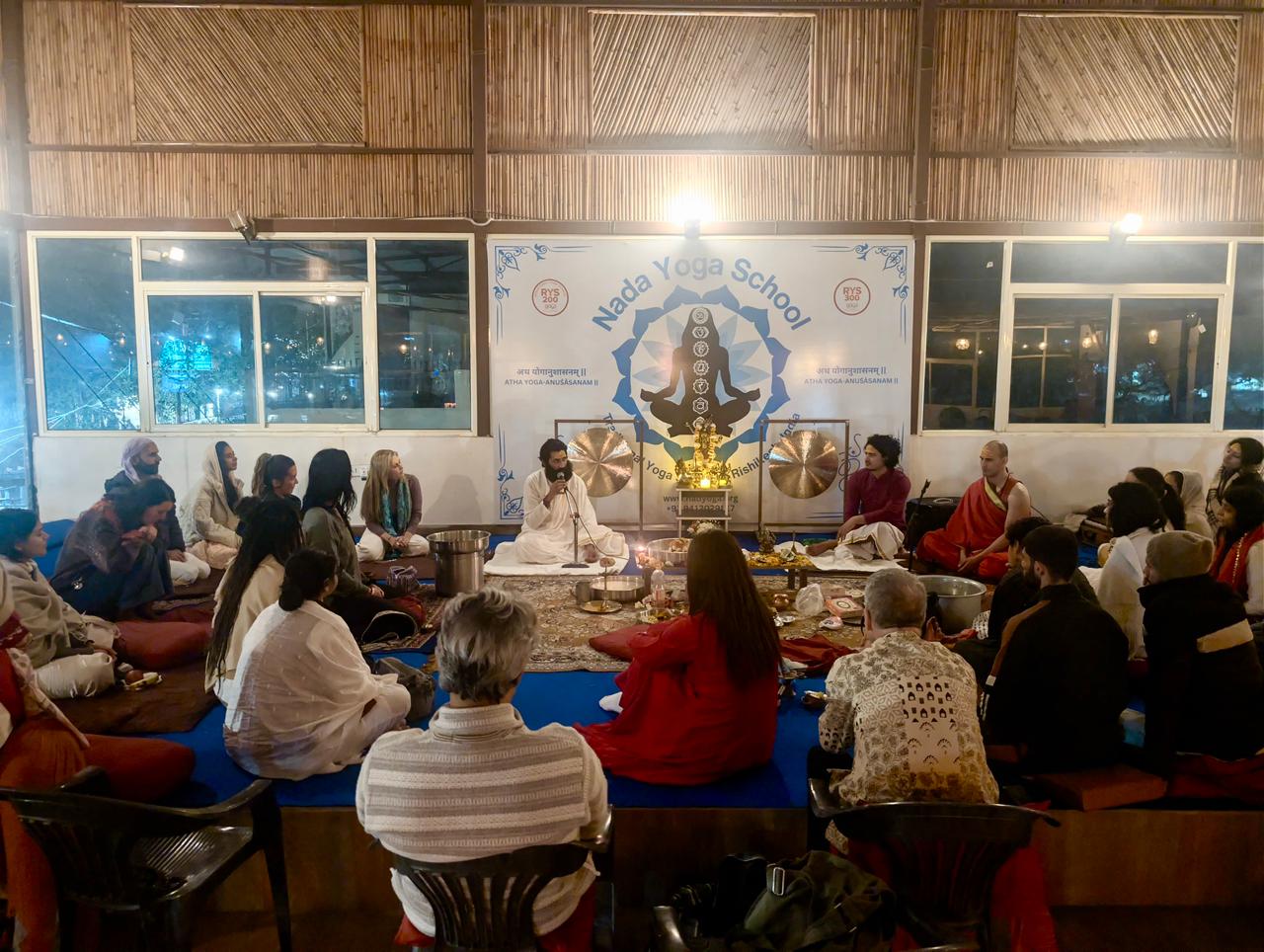
Nada Yoga School, Swarg Ashram, Rishikesh, Uttarakhand, IndiaNada Yoga School is a dedicated traditional learning space in Rishikesh focused entirely on the study and transmission of Nada Yoga — the yogic science of sound, vibration, and perception. The school was created to preserve the original understanding of sound in yoga beyond modern relaxation-based sound healing methods. In classical yoga, sound is not only used for calming the mind; it is a method for refining awareness. Through listening, resonance, breath, and attention, sound becomes a tool for understanding the relationship between body, mind, and consciousness. All programs at the school are designed around this principle. The training environment combines traditional knowledge systems with structured teaching methodology so students do not simply experience practices, but learn how to apply and teach them responsibly.
Our Vision
Most modern sound healing education focuses on instruments — how to play bowls, gongs, or frequencies. While these tools can be useful, yoga describes sound primarily as a process of perception. The purpose of Nada Yoga School is to restore this orientation: Students learn
- how sound affects awareness
- how attention changes the experience of vibration
- how breath, voice, and listening shape mental states
- how to guide others safely through sound-based practices
The goal is not performance, but clarity of facilitation.
What Makes the School Different
Sound as a Yogic Practice, Not Only Therapy
Rather than teaching sound only as a relaxation technique, the school teaches sound as a systematic path of meditation. Students learn inner listening (Nada), external sound (Shabda), and how the two interact.
Structured Teaching Methodology
Many practitioners can play instruments but struggle to guide sessions. The training focuses heavily on:
- session structure
- pacing
- observation of students
- adapting practices for different groups
Graduates leave knowing what to do in a real class environment.
Integration with Classical Knowledge
The programs include elements from traditional Indian knowledge systems so sound is understood as an organized language rather than random tones. Students study:
- basic raga framework
- rhythm cycles
- mantra pronunciation
- voice projection
- harmonium fundamentals
This allows teachers to lead kirtan and mantra sessions authentically.
Direct Experience + Supervised Practice
Daily practicum sessions ensure students teach during the course, not only after it. Feedback is continuous so confidence develops naturally.
Our Teaching Approach
The school follows three progressive layers of learning.
1. Perception
Students first refine listening — noticing how sound changes breath, attention, and internal sensation. This stage builds sensitivity and prevents mechanical facilitation.
2. Application
Students learn instruments, voice, and structured practices. Sound becomes intentional rather than decorative.
3. Facilitation
Students guide individuals and groups while being observed. The emphasis is on clarity, safety, and responsiveness rather than performance quality.
Areas of Study
Nada Yoga Foundations
- Principles of vibration in yoga
- Inner sound awareness
- Attention and meditation through listening
- Sound and states of consciousness
Sound Healing Methods
- Singing bowls
- Gongs
- Tuning forks
- Session design for relaxation and meditation
- Nervous system regulation
Breath and Voice
- Pranayama for sound sensitivity
- Vocal resonance
- Mantra chanting
- Leading group chanting
Indian Classical Music Integration
- Raga introduction
- Tala (rhythm cycles)
- Harmonium basics
- Structuring kirtan in yoga settings
Teaching & Facilitation
- Holding space
- Observing student responses
- Safety considerations
- Designing workshops and classes
Learning Environment
Nada Yoga School maintains small group sizes to allow individual guidance. Students practice daily and receive feedback from teachers and peers. The atmosphere is educational rather than retreat-oriented — focused, structured, and supportive. Participants are encouraged to ask questions, repeat practices, and understand principles rather than memorize routines.
Who Studies Here
The school welcomes students from many backgrounds:
- Yoga teachers expanding into sound meditation
- Sound healers seeking traditional grounding
- Musicians exploring therapeutic application
- Therapists and facilitators working with stress regulation
- Beginners interested in deep meditation
No prior musical experience is required.
Outcome of Training
Students completing programs at Nada Yoga School gain:
- Ability to conduct sound meditation sessions
- Confidence leading mantra and group practices
- Understanding of how sound affects the nervous system
- Skills to integrate sound into yoga classes
- Clear teaching structure rather than memorized sequences
Graduates are prepared to teach responsibly rather than imitate techniques.
Location — Rishikesh
Rishikesh has long been a center for yogic learning. Studying Nada Yoga in this environment supports consistent practice and focus. The daily routine and surroundings naturally reinforce the listening-based practices taught in the school.
Educational Philosophy
The school follows a simple principle: Sound is not used to create an experience — it reveals the experience already present. Because of this, teaching emphasizes sensitivity and observation over dramatic effects. Students learn to guide awareness rather than impose sensation. This approach makes practices adaptable for different populations including beginners, experienced practitioners, and therapeutic environments.
After the Course
Graduates commonly apply their training in:
- yoga studios
- retreats
- meditation classes
- therapy settings
- private sessions
- workshops
Some continue advanced study in mantra, music, or meditation facilitation.
Nada Yoga School offers a clear and systematic education in sound-based yogic practices. The focus is not only on learning techniques but on understanding principles, allowing students to confidently teach and responsibly share Nada Yoga in modern settings.